For my second historical visit, I traveled to Ford’s Theatre and The Peterson House in Washington, DC: the sites of President Abraham Lincoln’s assassination and death.
Since the assassination, Ford’s Theatre has been converted into a museum where you can learn everything about the assassination including the many attempts on his life before the fateful night in April 1865. You learn about the foreshadowing of the assassination from both President Lincoln and the man who shot him. You also learn of the lives and about the trials of those who conspired to (and were then charged with and then put to death) kill President Lincoln.
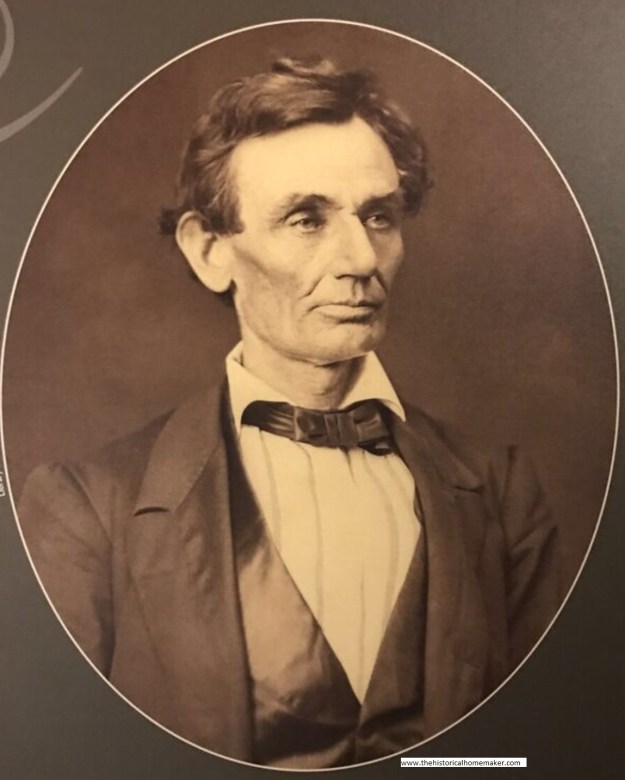 A young picture of Abraham Lincoln on display at Ford’s Theater
In 1860, Abraham Lincoln became the 16th President of the United States with 40% of the votes in a four-way contest.
During a speech the following year Abraham Lincoln concluded his speech with these words:
“…if this country cannot be saved without giving up that principle (freedom)…I would rather be assassinated on the spot than to surrender it…”
There were many attempts on President Lincoln’s life including one from a group who named themselves the “Plug Uglies.” After this attempt, President Lincoln was advised to stay armed and carry a weapon on his persons. He refused to do this and stated, “would not for the world have it said that Mr. Lincoln had to enter the National Capitol armed.”

These are the actual weapons given to President Lincoln that he refused to have on him
John T. Ford opened Ford’s Theatre in 1863 under the name Ford’s New Theatre after it having been converted from a First Baptist Church. Ford’s New Theater became a popular escape for entertainment during the depressing years of the Civil War. Many popular actors of the day performed at Ford’s Theatre including John Wilkes Booth. John Wilkes Booth was very famous and was known for his athleticism and his southern pride. He came from a famous Theater family and his father was the popular actor Junius Booth.
 John Wilkes Booth father: Junius Booth. On display at Ford’s Theater.
Interesting Fact: During a performance of The Marble Heart, John Wilkes Booth directed his threatening lines towards the Presidential Box at Ford’s Theatre while President Lincoln was in attendance. He knew President Lincoln was watching and Booth hinted publicly his dislike of President Lincoln.

John Wilkes Booth in 1865
The conspiracy to assassinate President Lincoln started in the boarding house of Mrs. Mary Surratt where she and other conspirators plotted the assassination. Of the conspirators who were put on trial following the assassination, four were sentenced to death: including Mrs. Surratt. She unfortunately is known as the first woman to be executed by the US government.
Ford’s Theatre has the stories of each individual conspirator on display as well as statues representing their likeness. I found that I am personally a lot taller than the conspirators but am of course, much shorter than President Lincoln – who was 6’3″

Here I am standing next to one of the conspirators!
The theatre itself is very spacious and open. The stage is not too high off the ground and the circular design of the room works really well.


Pictures of the theatre including seats, ceiling and stage
Although visitors are allowed to walk around the theatre, the Presidential Box where President Lincoln was assassinated is closed off.

Picture of the Presidential Box at Ford’s Theatre
You can go through the door frame where John Wilkes Booth entered and waited to assassinate President Lincoln was really neat to see.

Picture of the outside of the Presidential Box at Ford’s Theatre
Across the street from Ford’s Theatre is The Peterson House, which is where President Lincoln was carried to upon being assassinated and where he took his last breath.

Me standing in front of The Peterson House
The Peterson House remained a boarding house for immigrant families after the death of President Lincoln. After the owner passed away, The Peterson House was stripped of all the interior decorations and converted into a newspaper headquarters. After being purchased by the government, The Peterson House was converted into a museum along with Ford’s Theatre. Unfortunately, the decorations and furnishings inside the home are mostly not original pieces.
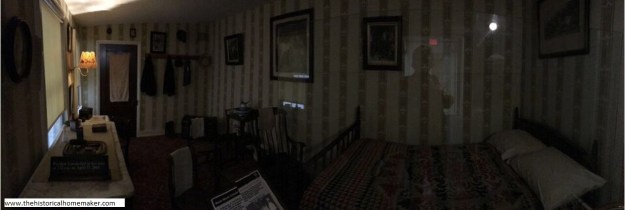
Picture of the room where President Lincoln passed away. The bed was on the far right.
The room where President Lincoln passed away is furnished almost identically to how it was when he was carried over from Ford’s Theatre. They have recreated the room with a photograph taken the evening of the assassination.
The Peterson House is an extension of the museum which chronicles the manhunt for John Wilkes Booth and the impact of President Lincoln on the world.

Picture of the John Wilkes Booth manhunt trail
You can follow the trail he took from Washington, DC into Virginia where he was finally caught and shot – which he then succumbed to his wounds.
Through The Peterson House is a spiral staircase with a statue of Abraham Lincoln books in the center and every flight of stairs down is another part of Lincoln’s legacy. One floor showcased the despair felt across the Nation by telling the details of the many funerals held for President Lincoln across the United States. Funerals were held in Washington, DC, Boston, Baltimore, Harrisburg and Philadelphia – just to name a few cities.
Interesting Fact: The turnout for these funerals were astounding averaging 100,000 people per funeral, and reaching over 1 million in New York.
President Lincoln was finally laid to rest in his hometown of Springfield, Illinois.
Following the same stairs downward was a room where people who passed by can leave notes describing their ideas on what qualities Abraham Lincoln possessed including courage, ideals for equality and integrity.
The staircase ends where the bottom of the statue begins and concluded my self guided tour of Ford’s Theatre and The Peterson House. There is so much more information and so many lessons to learn from going through these museums. Tickets are easy to purchase although you will probably want to plan your trip in advance online here because the theatre is still used for productions to this day.
Ford’s Theatre is a 100% MUST SEE visit! I promise you will have a great time and learn so much along the way.
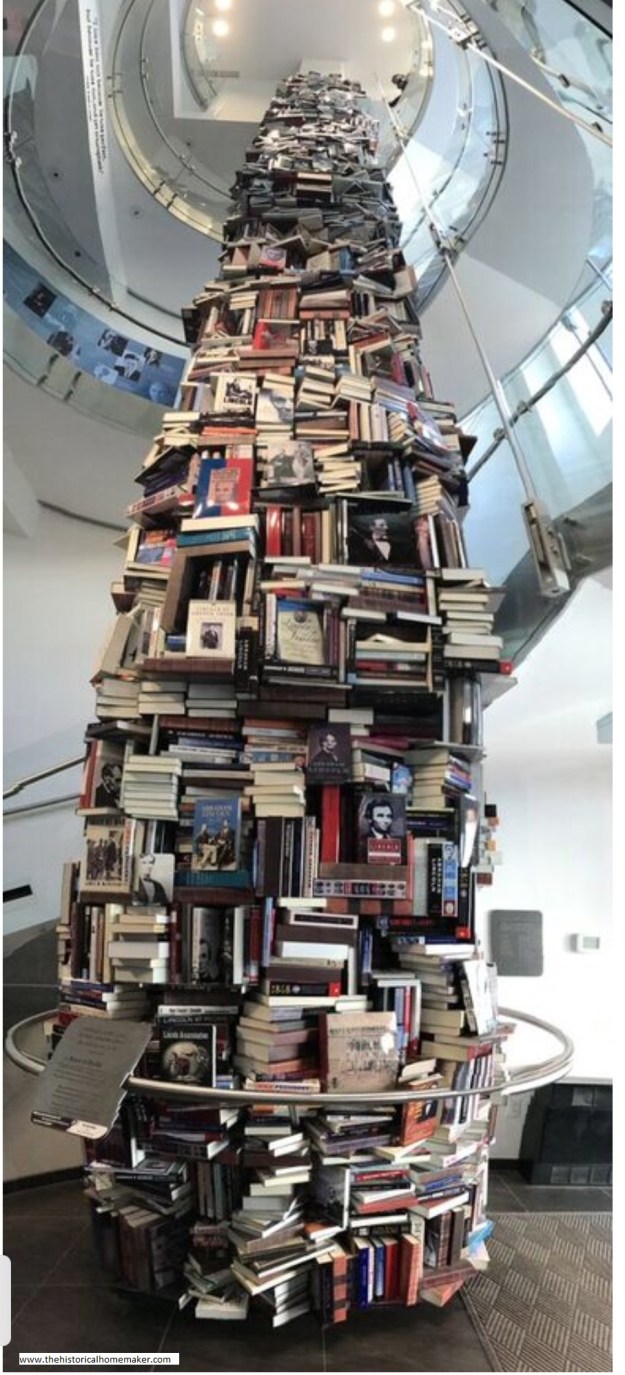 Picture of the statue of books

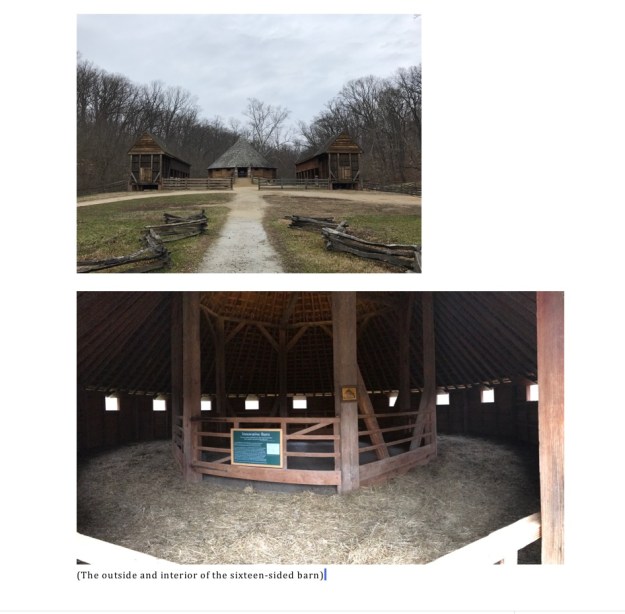
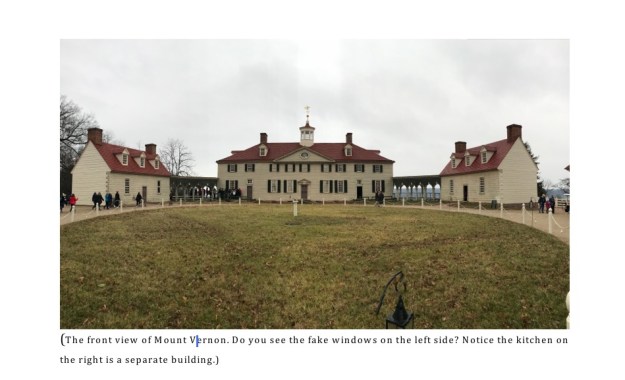
 Yesterday was a perfect day to visit Mount Vernon – the first President’s home. The father of our country.















 The Historical Homemaker