Making Spoonbread…
Leave a reply
My mother recently turned 80 years old and was reflecting on the types of food her mother once made for her. Her fondest memory was of her mother making something called “Poor Man’s Cake.” It was the war years and families couldn’t afford the luxuries of many items and had to learn to do without. Poor Man’s Cake (also called “Depression Cake”) was a popular staple in many homes in this era and as a child, my mother loved it because it was all they could afford to make at home. My mother often comments on how they didn’t know they lacked for anything financially because there was just so much love in the house.
The cake was perfect because it used what most people had in their kitchen which were the common ingredients of: flour, sugar, spices and raisins. Eggs were not included in the recipe.
When my mother was telling me the story about the cake her mother once made for her and how she hadn’t had it since childhood, I put my “internet sleuth” hat on and researched all about Poor Man’s Cake. I was looking for an authentic recipe that had not been modernized too much and I came across a wonderful article about a man who made the cake using his mothers recipe and well…be still my heart! This is the recipe that I used to make the cake with right here.
As soon as I made the cake, I decided to surprise my mom by shipping it off to her so that she could enjoy it. She enjoyed the cake and even shared it with her neighbors.
This past Sunday, Jim and I made our way over to Mount Hebron Cemetery and Gatehouse in Winchester, Virginia. It was a misty, dreary afternoon with a little bit of fog and it was the perfect setting to go walking throughout these hollowed grounds. We found our way to the Stonewall Cemetery section which is the Confederate soldiers burial grounds and memorial. Even though it had been such a long time ago when these heroes had perished – I just couldn’t help but have a heavy heart. The rows and rows of the dead behind the large monuments representing their home States was truly astonishing.
The Stonewall Cemetery has 2576 war dead.
These men were so young and so valiant. They were loyal and honorable. Most of these young men were only in their twenties when they were called to fight in a war and left home knowing that they would most likely never return. They did so without reservation and for something that they believed in: life and liberty. Love of Country. Freedom.
Thank God that for the men and women who still believe in the same principles of our fallen heroes and have the desire to step up when others are not able to. Thank you to the ones who have paid the ultimate sacrifice for our freedoms.
We will never forget you and will always have much gratitude.

Had a great day hanging out with The Historical Traveler discussing our next projects over pasta and warm bread (with yummy olive oil, of course!) Hope you all have a fabulous weekend ❤️🇺🇸


Standing in front of Cedar Hill, the home of Frederick Douglass (Photo Credit: The Historical Homemaker)
My latest travels took me to the historic museum and home of Frederick Douglass, located in Southeast Washington D.C. The museum showcased a timeline of Frederick Douglass’ life which included his many accomplishments and the influences he had on the course of American history. In the museum, there is a wall of his famous quotations, original pieces of his work, and of course, you can visit his beloved home, Cedar Hill, where he spent the last years of his life.
He was born into bondage in 1818 in the vicinity of Talbot County, Maryland. At eight years old, he was sent to a plantation in Baltimore, Maryland and this is where the mistress of the plantation grew very fond of him and started teaching him how to read and write – a practice that was uncommon for the time period (and in some places in the US it was against the law).
Frederick Douglass said goodbye to Baltimore in 1838 when he was 20 years old – leaving his former life in bondage behind for a brand new life in New York. Anna Murray Douglass, his first wife, sold her personal belongings to purchase him a ticket to New York. He was still a slave, however, and he vowed not to marry Anna as a slave but only if he were a free man. It wasn’t until after he secured his freedom that he and Anna were married. It was in New York that he met with the famous abolitionist William Lloyd Garrison who recognized Frederick Douglass as a talented speaker. He was then enlisted to give speeches across the country to help educate people about the horrible atrocities of slavery. Being that he knew first had what being a slave entailed, he was able to give a personal perspective on slavery and his audience continued to grow and he became a very popular orator.
Some of the highlights of his life:

One of Frederick Douglass’ famous quotes on display at the Frederick Douglass National Historic Site (Photo Credit: The Historical Traveler)

Original autobiography copy on display at the Frederick Douglass National Historic Site (Photo Credit: The Historical Traveler)

Frederick Douglass’ Family Tree on Display at the Frederick Douglass National Historic Site (Photo Credit: The Historical Traveler)

Exterior of Cedar Hill (I’m sitting on the left side of the porch) (Photo Credit: The Historical Traveler)
On February 20, 1895, Frederick Douglass died of a massive heart attack at Cedar Hill, and was buried at Mt. Hope Cemetery in Rochester, NY with his first wife, Anna. Shortly after he passed, Helen Pitts Douglass established the Frederick Douglass Memorial and Historical Association to preserve his legacy as well as his impact on United States history. The association still maintains the legacy today.
Cedar Hill beautifully sits on top of a hill overlooking Southeast Washington D.C. The tours are free, during which you will learn about the history of the house and Frederick Douglass’ time while living there. Most of the items in the house are original pieces including the portraits, dining room furniture, and beds.
There are several rooms in the house including two rooms for entertaining and over half a dozen bedrooms. Although the entire house is rich with history, three rooms in particular I found most interesting: the first den, the dining room, one of the three guest rooms for women, and Frederick Douglass’ bedroom, all of which have original pieces from when he lived at the house.

Entertaining room, Cedar Hill (Photo Credit: The Historical Traveler)
The first room used for informal entertaining of guests and showcases a piano in the left corner, a fireplace in the center of the room, and a bust of Frederick Douglass gifted to his family when he lived there. I learned in the tour that Frederick Douglass combined interior design with remembrance of American history, this being shown by the ball and chain tied around the curtains to the room symbolizing the roots of slavery in American history.

Picture of ball and chain curtain ties, Cedar Hill (Photo Credit: The Historical Traveler)
The dining room of Cedar Hill include pictures taken with other prominent Washington, DC people at the time, and original dining furniture. Frederick Douglass sat at the head of the table. This is indicated by the wheels on the bottom of the chair, which made it easier for him to stand up and speak, which he did frequently while entertaining his distinguished guests.

Dining Room, Cedar Hill (Photo Credit: The Historical Traveler)
On the second floor of Cedar Hill, there are three bedrooms: three for women (including guests and one room for each of his wives) and three rooms for men (including the personal bedroom of Frederick Douglass). The guest room used for women included an original portrait of Susan B. Anthony, whom he was very fond of for her advocacy for women’s rights.
Many people don’t know that since 1848, Frederick Douglass was also an advocate for women’s right to vote.

Women’s guest room with Susan B. Anthony portrait in the upper left side, Cedar Hill (Photo Credit: The Historical Traveler)
His bedroom was opposite of his first wife’s room in the upstairs hall. Frederick Douglass would use dumbbells to work out every morning after waking up to exercise and stay physically fit. Cedar Hill has these dumbbells and they can be seen on display by the foot of the chair in his room

Frederick Douglass’ bedroom, Cedar Hill (Photo Credit: The Historical Traveler)

Chair with original Dumbbells, Cedar Hill (Photo Credit: The Historical Traveler)
Two other pieces I found very interesting include his desk in his office and a trunk with his name on it, which was used on his many travels throughout the country and Europe.

Frederick Douglass’ Trunk, Cedar Hill (Photo Credit: The Historical Traveler)

Frederick Douglass’ Office, Cedar Hill (Photo Credit: The Historical Traveler)
Every room in Cedar Hill is beautiful in its unique way and the tour guides are very knowledgeable and will answer any questions you can think of while touring the house. Visiting Cedar Hill and learning about Frederick Douglass’ life and his huge impact on American History was truly a memorable experience for me, not to mention the wonderful scenic view from Cedar Hill.

View from outside Cedar Hill (Phot Credit: The Historical Traveler)
Click here to plan your free visit to Cedar Hill and the Frederick Douglass Museum.
Today in American history…Andrew Johnson married Eliza McCardle. He was 18 and she was 16 years old with they were married in the small town of Warrenton, TN on May 17, 1827. She was known to have had a calming effect on him – especially during the trying times of his troubled presidency.

I recently traveled to The Torpedo Factory Art Center, which houses the Alexandria Archaeology Museum. The Torpedo Factory Art Center was built and began functioning in November of 1918 shortly after WWI and has since been converted into a place for local artists to show their work and also to display the ancient relics found in the area nearby as well as throughout the Commonwealth of Virginia. These particular relics include a copy of The New York Tribune from 1861, an original musket that was built in the 1820’s, and a quartzite spearhead that dates back 13,000 years ago. Reading and learning about these relics, as well as the many others in the museum, allows a larger scope of understanding as to how our ancestors lived.
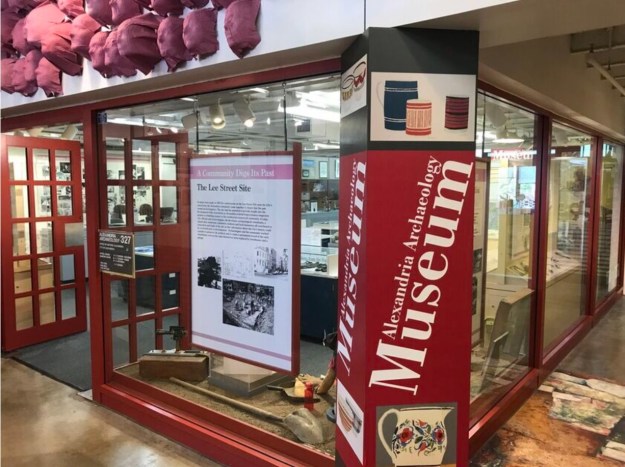
(Picture of Museum Exterior)
The city of Alexandria, Virginia is a fascinating place that was founded in 1749 and is rich in American history and politics. It was originally given the name “Water Street” because of its location and proximity to the Potomac River. Since it was originally founded, Alexandria has been built around a shoreline that increases over time, requiring updates to adjust with the shoreline.
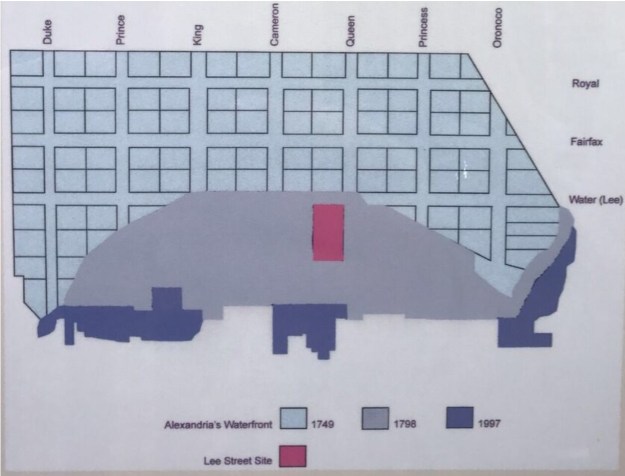
(Picture of Alexandria shoreline displayed at the Museum)
The first relic I found particularly interesting is a newspaper on display that was originally published on May 26, 1861 with a photograph on the front page of Colonel Elmer E. Ellsworth. Colonel Ellsworth had been assassinated merely two days prior in Alexandria. The paper was published by The New York Tribune, which was in print from the 1840’s to the 1860’s and was very much in support of The Whig Party. I thought it was very interesting how little the text was, and how much information fit on a single page. This makes sense though seeing as the daily paper was one of the few ways information reached the general public both on a National and a State level.

(Picture of the display of the New York Tribune article about Col Ellsworth)
The Alexandria Archaeology Museum includes displays of information regarding Alexandria’s role in the American Civil War. During the Civil War, many Alexandria businesses were converted into military hospitals including hotels, churches, and ordinary citizen’s homes. There were a total of 30 hospitals in the city of Alexandria at one time or another during the War. Upon the conclusion of the Civil War, the military hospitals were taken down and the buildings that were converted into hospitals were either torn down or changed their appearances in a dramatic fashion. Read more about Alexandria and their part in the Civil War here.
In 1978 during an excavation mission on the nearby courthouse, a Wickham musket was discovered almost completely intact. It was deduced that Marine T. Wickham manufactured the musket between 1822 and 1834. Wickham was contracted to produce rifles for the American Government out of Philadelphia. This particular Wickham musket pre dates the Civil War, albeit similar rifles were used in the war.

(Picture of musket)
The coolest piece of history on display in the Alexandria Archeology Museum (in my opinion anyway) is a piece of quartzite spearhead officially named “Clovis Point.” This particular Clovis Point was discovered in 2007 in Freedman’s Cemetery, a cemetery for formerly enslaved and free African Americans that has not used since 1869. What makes this Clovis Point very interesting is its over 13,000 years old! This piece of quartzite is from the Paleoindian Period and is the oldest artifact I have ever heard of and seen personally. There is generally not a whole lot of information about humans in that time period, making this relic quite a treasure due to its extreme age. This particular quartz was easily manipulated into a spear head early humans used to hunt with. The fact there is evidence of how humans lived 13,000 years ago still blows my mind.
Other artifacts I found personally interesting include a letter from a drummer boy, a list of diseases and causes of death from 1863-1868, and a cohesive file of death records from those same years. You can read through the death records from 1863-1868 and see if any of you recognize any of the names or if you even have ancestry included, and how everyone in the records died. I couldn’t help but look through the records to curiously see if any of my ancestors had their names in the book.
The museum also has a lot of activities for families and kids including putting artifacts together with your hands. There is way more to be seen and learn here and I highly recommend making the Alexandria Archeology museum a point of interest when you’re in the area if you want to learn more about how life was from hundreds to thousands of years ago. You can learn more about the Alexandria Archeology Museum right here.
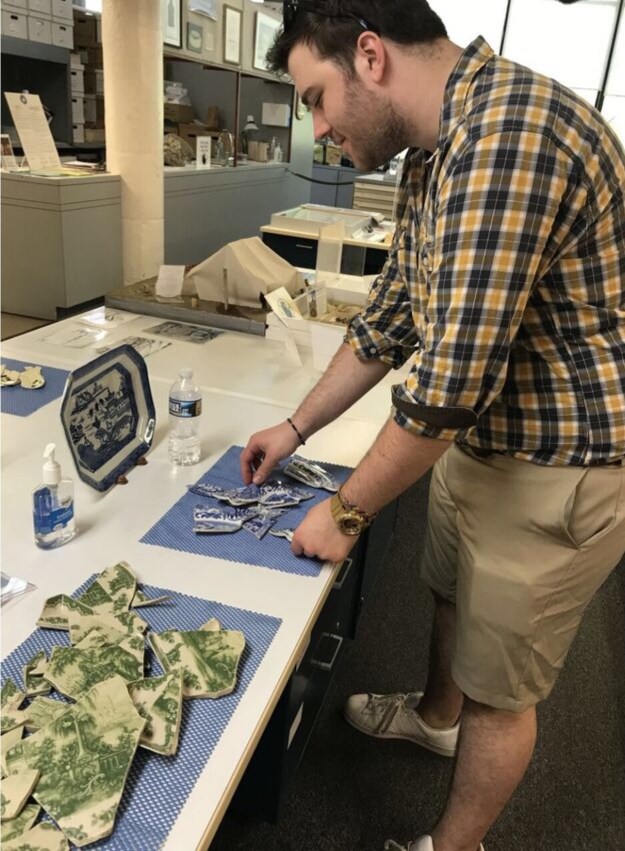
(Picture of me putting together a plate)

(Picture of the historic and beautiful Alexandria Waterfront)
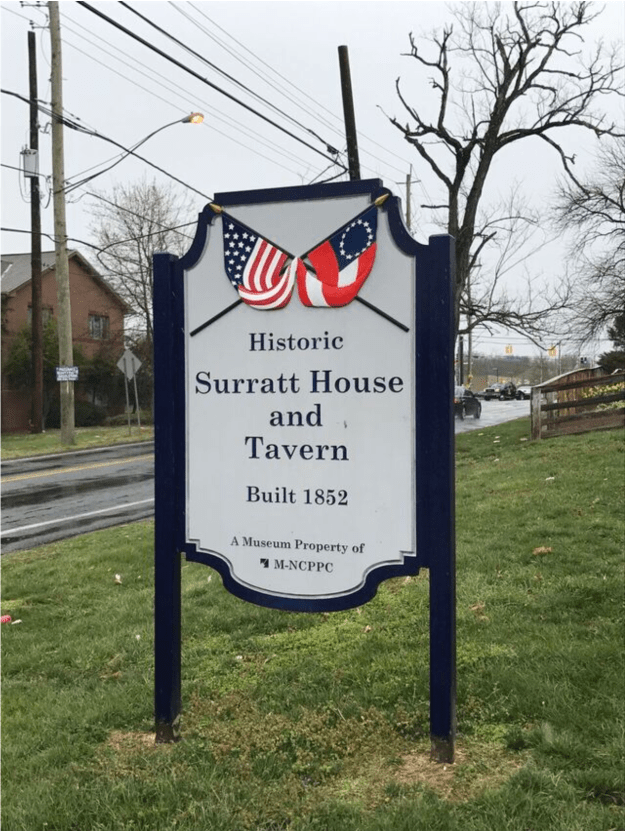
It was a strange and surreal day when I visited The Surratt House, only a few miles outside of Washington, DC in the town of Clinton, Maryland. It was a rainy day and it was foggy when I arrived at the house. A few weeks ago, when I visited Fords Theater, I decided to visit the former home of Mrs. Mary Surratt who is one of the most likely misunderstood and vilified women in history. Her story is so intriguing and fascinating and I just wanted to see for myself where she one lived and to try to figure out what brought a simple wife and mother to the hangman gallows in Washington, DC on July 7, 1865.


Mrs. Mary Surratt holds has a unique and infamous role in American history as the first woman put on trial and then sentenced to death in a military court. This was, of course, due to her questionable involvement in the plot to assassinate President Abraham Lincoln. Although friends and family testified at her trial that she was a good Christian woman who was not involved in all with the conspiracy to kill President Lincoln, Mary Surratt, along with three other men, were executed by hanging for treason. The only offense committed by Mrs. Surratt was being the owner of the boarding house where the real conspirators planned the attack on President Lincoln’s life.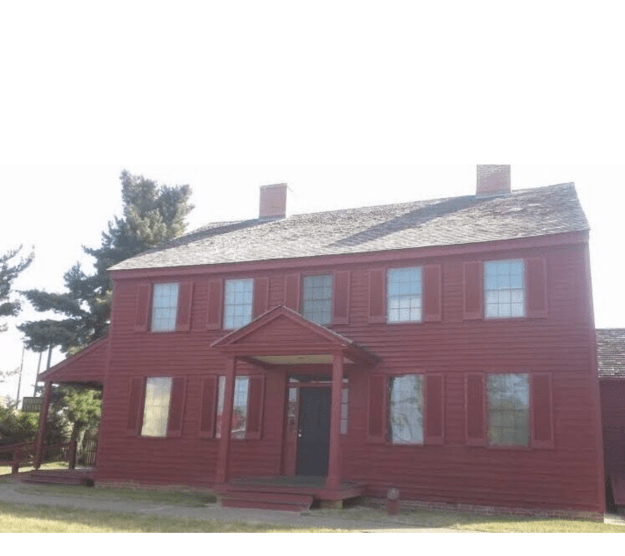
The exterior of the Surratt House (photo credit: The Historical Traveler)
Mary Surratt’s parents had owned a farm, which she later inherited along with her husband, John Surratt. The Surratt’s also invested in a town house on H street (located near Ford’s Theatre) and converted their other home (in what was called Surrattsville) into a tavern due to it’s convenient location to major cities including Washington, DC.


The Surratt’s had three children: Isaac, Susanna, and John Jr.
The tavern did more than serve drinks to visitors. Guests could also vote here, pick up their mail, and have a warm dinner and lodging overnight for a decent fee.

The Bar with the Post Office Slots (Photo Credit: The Historical Traveler)
(Interesting fact: People used to pay to pick up their mail. In an effort to save money, peers would tell whom they were writing to that receiving a letter was enough to signal their safety, and there was no need to spend money to pick up their mail. This led to the usage of postage stamps, where you had to pay money to send mail rather than receive it.)
Upon her husband’s death, Mary Surratt turned the tavern over to John Lloyd while Mary took Susanna and John Jr. to live in their boarding house in Washington, DC.
The tavern formerly owned by Mary Surratt was restored in the 1970’s, but maintains furniture all from the period. There are two original pieces still in the house now: the round table and Mrs. Surratt’s French writing desk.
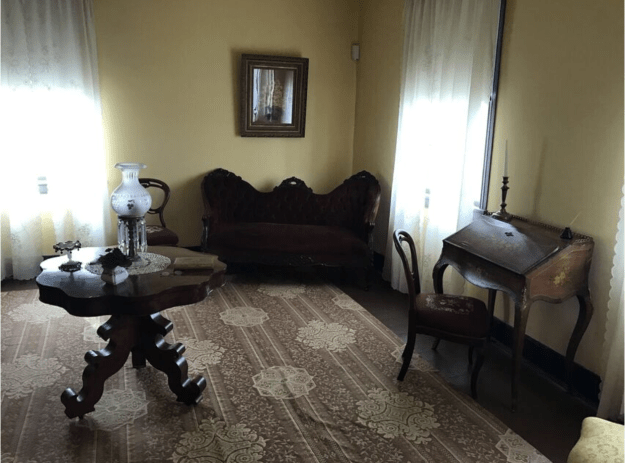
the round table and Mrs. Surratt’s French writing desk (Photo Credit: The Historical Traveler)
A unique feature of the house, which was uncommon for the time, is the kitchen addition to the house. Most kitchens were separate attachments to prevent house fires, but the Surratt’s had a tin burner that reduced the chances of a house fire significantly.
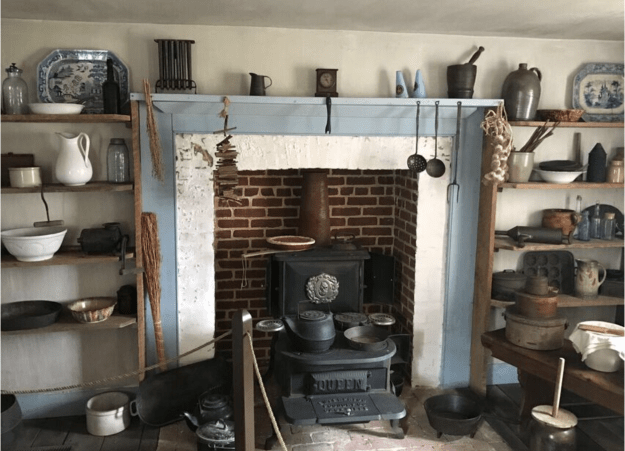
Kitchen in the Surratt House (Photo Credit: The Historical Traveler)
(Interesting fact: windows and doorframes are blue in the kitchen because at the time, it was believed that flies and other insects would not cross over due to their confusion of thinking it was the sky)
When the house was restored and converted to the museum it is now, a public bathroom had to be built. Mr. and Mrs. Surratt’s bedroom was turned into a bathroom and the room where Isaac and John Jr. slept is made to look like Mr. and Mrs. Surratt’s bedroom.
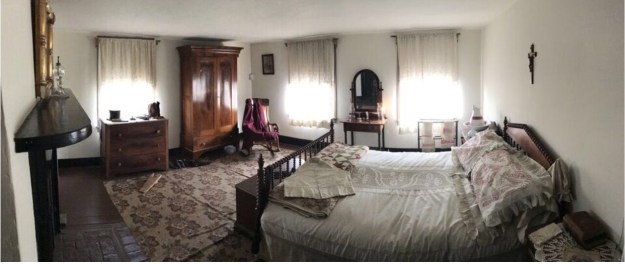
Bedroom made to look like Mr. and Mrs. Surratt’s (Photo Credit: The Historical Traveler)
Before that fateful April night in 1865, John Wilkes Booth made a request of Mary Surratt to bring a package to her old tavern, upon learning of visiting John Lloyd. Around the same time, two carbine rifle were hidden in the attic of the house. John Wilkes Booth took one rifle after escaping from Washington, DC and the other was recovered by Lloyd and investigators after having fell through the rafters.

picture of attic and rifle on the side of the door, where it initially was hidden (Photo Credit: The Historical Traveler)
The trial of Mary Surratt was controversial for several reasons. Despite testimony from peers and neighbors who claimed she was a good Christian woman, she was sentenced to death by a military court, causing more controversy because people felt that it was unjust for the military to convict her when women weren’t permitted to enlist. People felt that the only crime she committed was that she was the owner the property where the conspirators met and hatched the assassination plot.

The Conspirators

Picture of the four executed conspirators. Mrs. Surratt is on the far left with the rope around the bottom of her waist.
(Interesting Fact: Traditionally a noose was wrapped around the neck 8 times of the men about to be put to death. Because Mary Surratt was a woman, they only wrapped the rope 5 times because they believed that she most likely was not going to be executed because after all – she was a woman and women didn’t get put to death. This had never happened in US history until then)
Mary Surratt is buried in Mount Olivet Cemetery in Washington D.C. However, her gravesite is not marked per request of her family.
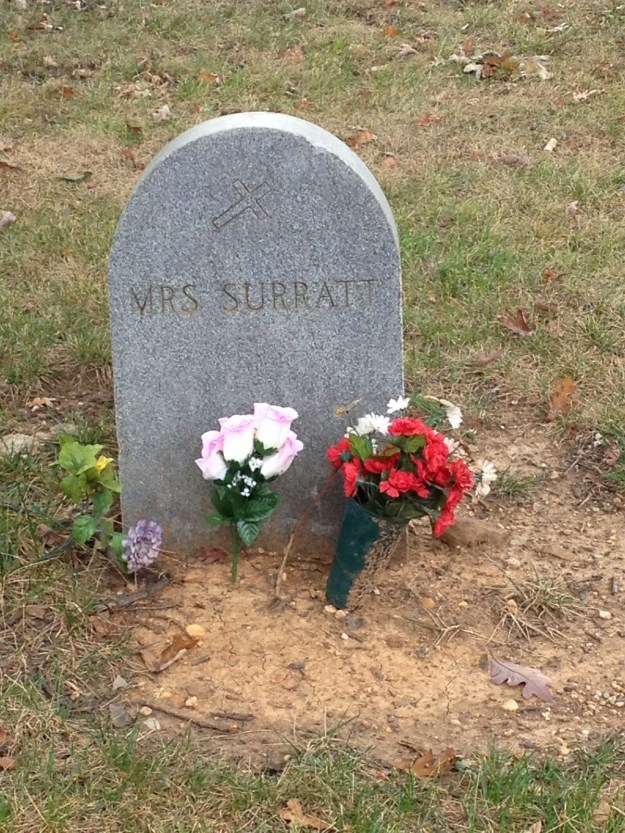
I’ve merely skimmed the surface with information that is available only at the Surratt House. I thoroughly enjoyed every minute there as a follow up to Fords Theater. The tour guides are very knowledgeable and can answer any questions. Tickets are very inexpensive too. They offer senior and student discounts too! To plan your trip and learn more about the first woman ever executed by the U.S. Federal Government, visit the Surratt House Museum.

Today has been the perfect day for baking. It’s a cold, snowy day and all in world (at least in my area) has come to a halt. It is quite peaceful and wonderful to get off of the “hamster wheel of life” and just hang out in pajamas, fireplace on…watch old movies on Netflix and of course for me…to bake!
Being that I am snowed in today, I had to rummage for things in the pantry that I could use for baking today and was excited that I had all to make gingerbread!
Gingerbread was a popular staple for the soldiers during the Civil War. Molasses was so much cheaper to use than sugar and so a lot of gingerbread was consumed during this time. Gingerbread was sent to the soldiers via care packages (along with socks) from their loved ones and I envision that they must have loved receiving this wonderful cake made with much love from home. It tastes better than hardtack that’s for sure!
I found a wonderful recipe from The Urban Homemaker which was quite easy to make – and I am all about simplicity. No offense to Martha Stewart but…I need simple and uncomplicated recipes!
Happy Snow Day!
Coleen
 The Historical Homemaker